
How to Sauna: Questions Answered
Saunas are awesome, and we’ve previously covered the many mental and physical benefits of spending time in one.
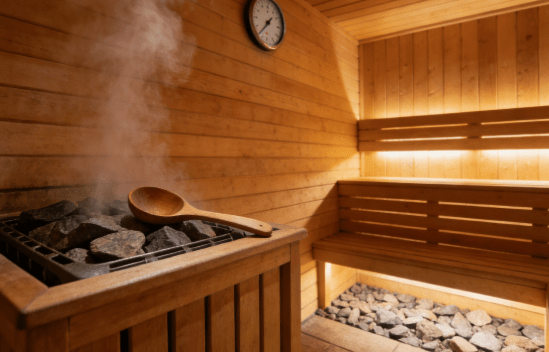
If you’ve been thinking about adding more restorative, heat-based self-care to your routine, we’re breaking down all the key questions you need to know about making saunas a regular part of your life.
How to Choose a Sauna
Finnish vs. Infrared: Which Should You Pick?
Saunas come in two main varieties: Finnish and infrared. Both deliver heat and sweat, but they do it in fundamentally different ways.
Finnish Saunas
The classic, traditional sauna. A Finnish sauna uses an electric or wood-burning heater to warm the air in a wood-paneled room or barrel. Temperatures typically range from 160 to 220°F, with 190–200°F being common. The body is heated by the superheated air through conduction.
Most research on the health benefits of saunas has been conducted using Finnish saunas, making them the gold standard in studies.
Infrared Saunas
Instead of heating the room air, infrared saunas use near and far infrared radiation to directly heat your body. Think of it as gentle, safe heat that penetrates the skin. While it might sound like a microwave, the radiation is completely safe.
Because they heat your body directly, infrared saunas don’t need to make the room as hot as a Finnish sauna to make you sweat. The experience feels less intense on the air, but the benefits are surprisingly similar.
Which to Choose?
It comes down to personal preference and budget. Infrared saunas are generally more affordable, energy-efficient, and space-friendly (they fit in basements, garages, or bedrooms). If you dislike the oppressive heat of a Finnish sauna, infrared might be for you.
If you have the space and budget and crave that traditional, immersive sauna experience, go Finnish. I believe the true healing power of saunas isn’t just the heat—it’s the ritual. The smell of wood, the ability to throw water on hot rocks to create steam, the warmth of the air… it feels good.
Finnish saunas are also often larger, and some are even built outdoors. My outdoor sauna from Almost Heaven fits six people comfortably, and having a “third space” apart from the house—where you can breathe fresh air and glimpse nature—adds to the experience.
Where to Find/Buy a Sauna
You can find saunas at gyms, health clubs, and tanning salons.
If you’re buying your own, you can purchase directly from manufacturers, on Amazon, or even at Costco.
For a quality, affordable Finnish sauna, check out Almost Heaven (that’s where I got mine). Their site often has sales, so keep an eye out.
How to Sauna: Safety & Precautions
Before diving into the details, it’s important to note that sauna heat acts as a physiological stressor. If you fall into any of these categories, consult your doctor first:
- Heart conditions: Sauna boosts your heart rate, so proceed with caution.
- Prescription medications: Some drugs don’t mix well with heat exposure.
- Skin conditions: Sauna increases blood flow, which can help some skin issues but worsen others.
- Eczema and rosacea may be aggravated by steam. For eczema, consider infrared saunas, as the direct heat may help.
- While sauna is often said to help acne by opening pores, the heat and sweat can actually inflame breakouts, especially cystic acne. Wash your face thoroughly afterward if you acne-prone.
- Fertility concerns: As we covered in our male fertility post, the testicles need to stay cool. Sauna heat can temporarily lower sperm count and motility. These effects are reversible, but if you’re TTC, consider skipping the sauna or opting for a cold shower instead.
Sauna Temperature & Duration
What Temperature Should It Be?
There’s no exact “perfect” temperature, but most health studies use 180–200°F. I personally like 210°F for a concentrated hit.
For infrared saunas, aim for 175–195°F.
How Long Should a Session Last?
The traditional Finnish sauna length is 20–30 minutes, and most studies use at least 20 minutes.
The duration depends on the temperature:
- High heat (190–210°F): 15–20 minutes is plenty.
- Lower heat (130–150°F): You can stay for 60–90 minutes easily.
For infrared saunas in the 175–195°F range, 20 minutes is usually enough to get fully relaxed.
Splitting Sessions: If possible, take cool-down breaks. In spring, summer, and fall, I often jump in the pool between rounds. In winter, step outside for fresh air for a few minutes.
Listen to Your Body: You’ll start warm, then hot, then comfortably “overheated”… until you hit that point where you think, “Okay, that’s enough.” That’s your cue to rest or exit.
How Often & When to sauna
Frequency: You could sauna daily, but since heat is a stressor, balance is key. Two 20-minute sessions per week are enough to gain benefits. Experiment to see what your body “craves.”
Timing: Avoid saunas right before a workout—heat plus exercise is a double stressor that can hurt performance. Do them on rest days or right after your workout, when your body is primed to recover.
What to Do (and Not Do) in a Sauna
- Phones: Not recommended. Heat damages devices, and saunas are the perfect time to disconnect.
- Books: Your focus and higher thinking will decline as your body heats up, and your hands will be too sweaty to hold a book.
- Light Stretching/Exercise: If space allows, gentle stretches feel great. But remember—your body is already working hard from the heat, so go easy.
- The Best Thing to Do: Nothing. Just sit or lie down (sitting up feels hotter, as hot air rises). Let your mind wander; reflect when clear, meditate when blank. It’s your sanctuary.
Sauna Etiquette: We have a full article on this!
Post-Sauna Care
During a 20-minute session, you can lose up to four cups of water through sweat. Rehydrate with plenty of water, and add electrolytes if needed.
You’ll probably want to shower, and a cold shower feels amazing afterward—way more refreshing than usual!
 MaleRevivePro