
The Ultimate Guide to Getting Enough Sunlight in Winter

Sunlight is a powerful recharge. When you’re deficient, you might feel like a houseplant stuck too far from a window—gradually drooping, losing energy, and wilting both physically and mentally.
This isn’t just psychological. Sunlight delivers a powerful blend of health benefits: it helps lower blood pressure, reduces inflammation, supports healthy testosterone levels, improves insulin sensitivity, boosts immunity, and enhances mood and sleep quality. Many of these advantages stem from sunlight-induced vitamin D production, but some occur independently, directly from the light itself.
Winter, however, makes adequate sunlight hard to come by. The sun sits lower in the sky, days are shorter and grayer, and UVB rays—the kind your skin needs to make vitamin D—often fail to reach far-northern latitudes in strong enough doses.
Still, winter doesn’t have to cut you off from sunlight’s benefits. With the right strategies, you can still get meaningful exposure, even during the darkest months.
Maximize the Moments of Sun You Do Get
Winter sunlight may be faint, but it’s still there. The key is to capture and maximize these brief bright moments.
Aim for 15–30 minutes daily. In summer, 15 minutes a few times a week may suffice. But in winter, since sunlight is weaker, aim for at least 15–30 minutes daily—even more if you can. Higher altitudes also offer stronger exposure.
Time it right. Aim for outdoor exposure around midday (roughly 10 a.m.–2 p.m.), when the sun is highest and light is most intense. This gives you the brightest, most potent dose of daylight all day.
Get active outside. Choose activities that get you outside — everything from walking the dog to shoveling snow counts — and try to deliberately engage in outdoor recreation like going snowshoeing on the weekend. Staying active outside will keep you warm as you soak in the rays, and movement has its own benefits for vitamin D metabolism, energy levels, and mood — so you’re getting triple value out of each minute of outdoor activity.
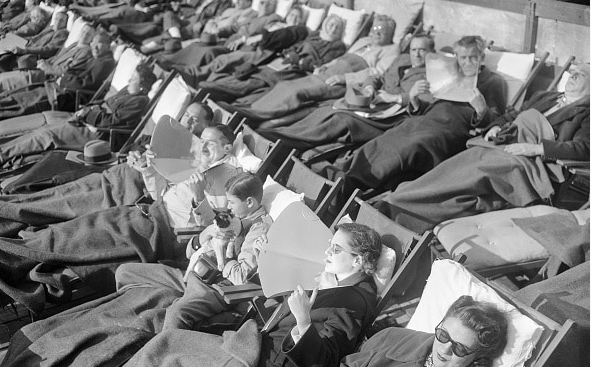
Sunbathers on a cold day at Coney Island
Maximizing Skin Exposure & Daily Habits
To get the most out of winter sunlight, expose as much skin as possible. The challenge isn’t just the weak rays, but also bundling up against the cold. Even just your face and hands can help—sleeping with just your face exposed in a warm bag works, though more skin is better. Consider a warm vest over a short-sleeve shirt to expose your forearms. Working out outdoors is ideal: once your body warms up from exercise, it’s easier to shed layers.
Skip the sunscreen during winter (unless you’re at high altitude or staying out for hours). Forgoing sunscreen allows more rays to penetrate, maximizing benefits.
Get out even on cloudy days. Clouds filter rays but don’t block daylight—bright outdoor light is far superior to indoor lighting for supporting your circadian rhythm and mood.
Light Therapy & Supplementation
In regions above approximately 37° latitude (covering much of the U.S. and Europe), sunlight from October to March is often too weak to provide full benefits.
- Light Therapy: SAD lamps deliver 10,000 lux of bright light. Sit in front of one for 15–30 minutes each morning to offset low natural light and boost energy.
- Tanning Beds: For reliable vitamin D, choose a bed with 2–5% UVB output (low-pressure beds are best). Limit sessions to 5–10 minutes, 1–2 times weekly to avoid overexposure.
- Vitamin D3: Supplement with 2,000 IU of D3 daily (or more based on your levels). For optimal calcium absorption, pair it with Vitamin K2 to direct calcium to bones, not arteries.
A Low-Latitude Winter Getaway
A week-long escape to a sunny, low-latitude destination can be a powerful reset.
- Vitamin D Boost: 30–60 minutes of daily sun exposure can generate tens of thousands of IU of vitamin D. Stored in fat, these benefits can last 4–8 weeks.
- Circadian & Mood Reset: Consistent sunlight resets your sleep cycle and elevates mood-enhancing neurotransmitters like serotonin and dopamine.
- Physical Relaxation: Sunlight triggers nitric oxide release, relaxing blood vessels and lowering blood pressure—contributing to that calm, euphoric “vacation high.”
Wrapping Up
While winter makes sunlight harder to find, it doesn’t have to cut you off from its benefits. By prioritizing outdoor time, using targeted supplements, or even taking a warm-weather trip, you can maintain physical and mental vitality all season long. Keep chasing the light until spring brings it back in full.
 MaleRevivePro